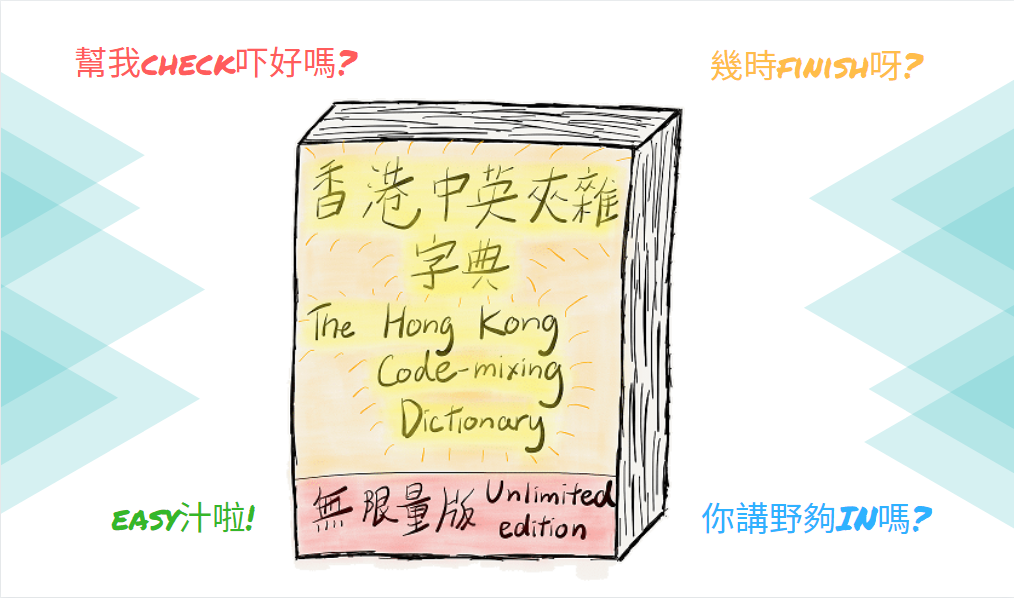
Definition: Purportedly to have come from online competitive gaming where a player brings his team to victory, this is a code-mixing term used by native Hong Kongers to refer to helping and leading someone to achieve something. At times, it can also refer to being able to dress effectively which covers everything from head to toe, including hair.
Usage: E.g. 日系唔只著衫 要化埋妝同髮型同襯埋accessories 要full gear先會carry得到 (Japanese fashion isn't just about wearing clothes. You have to put on make-up, have a certain hairstyle as well as matching accessories. You must have full gear in order to carry this fashion.)
Synonym: 駕馭
Reference: https://lihkg.com/thread/475055/page/9
Definition: Pronounced as '痾打', this is a more elegant term that refers to the Cantonese equivalent(落單)for placing orders. Sometimes, it is used by the police when giving instructions to the subordinates.
Usage: E.g. D野仲未黎既?我落左order好耐喇喎。快D吹吓佢。E.g. 警察:This is an order! Understand?! 下屬:Yes, sir!
Synonym: 落單
Reference: https://www.gushiciku.cn/dl/0pydp/zh-hk
Definition: A code-mixing term used by native Hong Kongers to refer to acting or speaking appropriately rather than being logical in the technical sense. Also, it usually implies having a good level of spiritual maturity in addition to basic common sense so that one does not say or do stupid things that is disrespectful to others.
Usage: E.g. 睇完艾力訪問姜濤,講嘢都好sensible,其實佢個人真係唔差,心地善良 (After watching Eric's interview with Keung To, I thought his words were very sensible. In fact, Keung To is not really that bad of a person, but is kind-hearted.)
Synonym: 理智
Reference: https://www.threads.com/@aa11yy__/post/DQ64WkTEwpw?xmt=AQG0os4onkNngeDaBXXgpug3rEeIp7OiEA1gUR05-T_52H1LwEOo67WyTueAopajb2mrmGYm&slof=1
Definition: A phrase used by native Hong Kongers to affirm that something is true or obvious, usually among friends and relatives in informal settings, especially with the particle 'la' in Cantonese.
Usage: E.g. 朋友: 今日出街記住載口罩。 你:Of course啦!
E.g. 女朋友: 哇,你好叻呀。 你:Of course啦!
E.g. 男朋友: 估唔到你咁醒目。 你:Of course啦!
Definition: (textspeak) Transliterated from ‘緊‘, this is a Kongish code-mixing term that is added to the end of verbs to denote the sense of ongoing, just like the ‘ing’ in English as in ‘doing’.
Usage: E.g. Nei jo gun d meh ar? (你做緊d咩呀?)
E.g. Ngo sik gun farn ah. (我食緊飯呀)
Synonym: 緊
Reference: https://hklanguage.home.blog/tag/kongish/
Definition: A code-mixing filler term used by westernised Hong Kongers when they don't really find the other person's topic is all that interesting in a conversation.
Usage: E.g. A: 我平時鍾意寫app,去語言交流免費教人廣東話。B: 哦,interesting, interesting... (A: I like writing apps and going to language exchange to volunteer teaching people Cantonese regularly. B: Oh, interesting, interesting...)
E.g. 我見外國人成日都用interesting 黎答人,仲要面無表情,會唔會係根本interesting 係外國一直都只係解: 哦⋯⋯. (I often see foreigners use 'interesting' as a response in a conversation, but without facial expression. Could it be that 'interesting' merely means like 'oh....' from a foreigner's perspective?)
Synonym: 很有趣, 哦
Reference: https://lihkg.com/thread/1047783/page/1
Definition: A Kongish code-mixing phrase that local Hong Kong students use to ask what the heck someone is talking about. Even though it looks like a westernised expression, spring actually refers to testicles and is quite rude when used as an expression.
Usage: E.g. Ho lun dor jargon ar. Up mud spring ar? (So many f***ing jargon. What the testicles are you saying?)
Synonym: 噏乜春
Reference: https://www.hk01.com/熱爆話題/364993/konglish瘋狂洗版-ga-yau係點解-即睇港式英語大測試
Definition: (idiom) Known as Kongish and derived from '五時花六時變‘, this is a code-mixing phrase that native Hong Kongers use to describe someone who is indecisive and prone to changing his or her plan all the time.
Usage: E.g. 你唔係話過鍾意呢件衫咩?你真係five o'clock flower six o'clock change呀。(五時花六時變)
Synonym: 五時花六時變
Reference: https://youtu.be/_3hhDIErE2g?si=SLsZUTCKhV5cfm8x

 Instagram