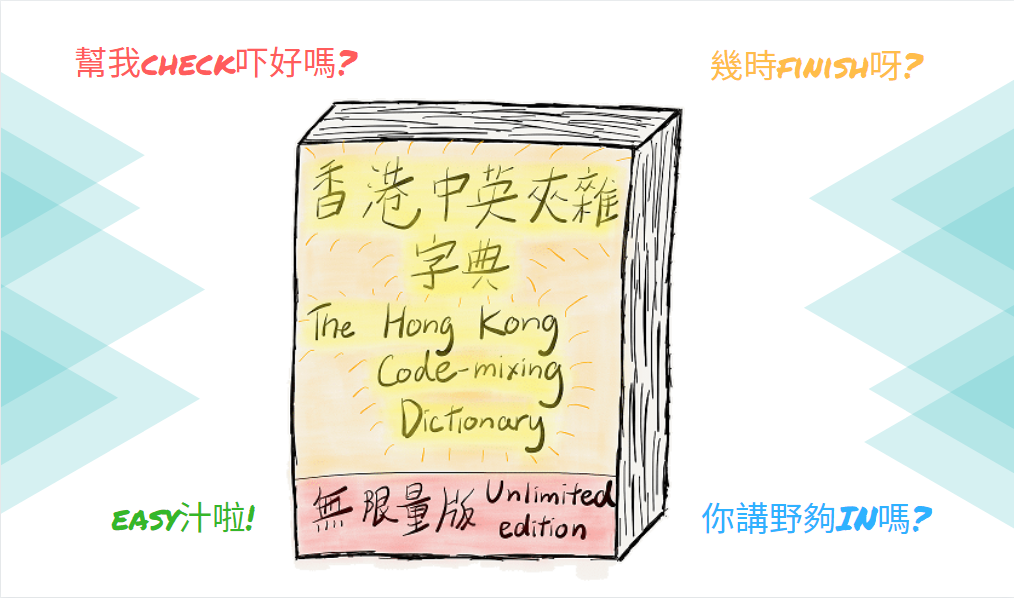
Definition: A code-mixing term used by working class Hong Kongers to avoid the use of sensitive negative vocabulary when they want to describe a situation where there can be anger or resentment involved when disagreement happens.
Usage: E.g. A: 雖然我地達唔到共識,但係大家都唔好有hard feeling, ok? B: OK,明白。 (A: Even though we did not reach a consensus, we should not have any hard feelings okay? B: Okay, understood.)
E.g. A: 雖然我地達唔到共識,但係大家都唔好有怨恨, ok? B: 講咩呀你?我幾時有怨恨?! (A: Even though we did not reach a consensus, we should not have any resentment okay? B: What are you talking about? When did I have resentment?!)
Synonym: 憤怒, 怨恨, 不快
Reference: https://lihkg.com/thread/3777161/page/1
Definition: Purportedly to have come from ‘娘’ meaning an old married woman, this is a code-mixing term used by native Hong Kongers to describe someone’s appearance as old-fashioned.
Usage: E.g. 你今日著衫好leung!(You dress very old-fashioned today!)
Synonym: 娘
Reference: https://www.cantonese.sheik.co.uk/phorum/read.php?14,140076,140076
Definition: A code-mixing term used by overseas educated Hong Kongers to refer to the initial notification sent by a university presenting an acceptance of an applicant for a course, often provided that the applicant fulfills a number of conditions and the payment as well.
Usage: E.g. A: 大學出左offer比你未? B: 收到同接受左喇,但係仲未正式取錄。(A: Have you received the offer from university yet? B: I received it and accepted it, but the admission is not officially confirmed yet.)
Synonym: 取錄, 錄取通知
Reference: https://lihkg.com/thread/2632592/page/1
Definition: Often pronounced with a rising tone, this is a code-mixing term that is often overused by Fake ABC's in Hong Kong when they have trouble answering a question or want to avoid embarrassment.
Usage: E.g. Well,呢個問題我要諗吓先再答你。
E.g. Well,其實你都講得有道理。
Reference: https://www.hk01.com/開罐/128449/你是否-偽abc-chill-中文意思係咩-10個港人常用錯英文字
Definition: Often pronounced as 'Q' or used as 'Q-tee', this is a code-mixing term that is used by Hong Kongers instead of '可愛' in Cantonese.
Usage: E.g. 哇,個公仔好Q呀!
E.g. 港女:你睇吓我今日著得Q唔Q-tee呀?
Synonym: 可愛
Reference: http://www.cmi.hku.hk/Ref/Article/article02/01.html
Definition: 好像kam(第6聲)?1的「?」也是由lift翻譯過來,香港開埠以來人民就懂了,沒有人會說「請按升降機」或「請按電梯」,別人會覺得很作。廣東話的精粹是快和短,許多文書上的雙詞在口語上普遍用一個字來形容。這些例子日後再談。(It seems that the "lip" (1st tone) is also translated from 'lift' in English, just like 'kam' (6th tone). Since the start of Hong Kong, people have already understood this. No one will say "please press the elevator" or "please press the escalator". The essence of Cantonese is fast and short. Many doublet words in documents are commonly expressed as one word colloquially.)
Usage: E.g. 大廈部lift最近好嘈, 小弟住高層,我係屋企成日聽到樓上傳來磅磅聲,全日都有呢種聲 (The lift in the building has been very noisy lately. I live on a high floor, and I often hear banging sounds upstairs at home. There is this kind of sound all day long.)
Synonym: 升降機; 電梯
Reference: https://lihkg.com/thread/3651008/page/1
Definition: A generic term for a number of different Chinese words of equivalent meaning, sometimes used to tone down your directness and also to maximise communicative efficiency.
Usage: E.g. 老師: 老師唔expect你100分,不過盡左力就得喇。(要求)
E.g. 朋友: 今日係我生日。我expect你都比下面掛。(預料)
E.g. 我冇expect過今次考試會考成咁。(預期)
E.g. 上司對你冇咩expectation,總之搞掂D野就得喇。(期望)
Synonym: 要求; 預料; 預期; 期望

 Instagram