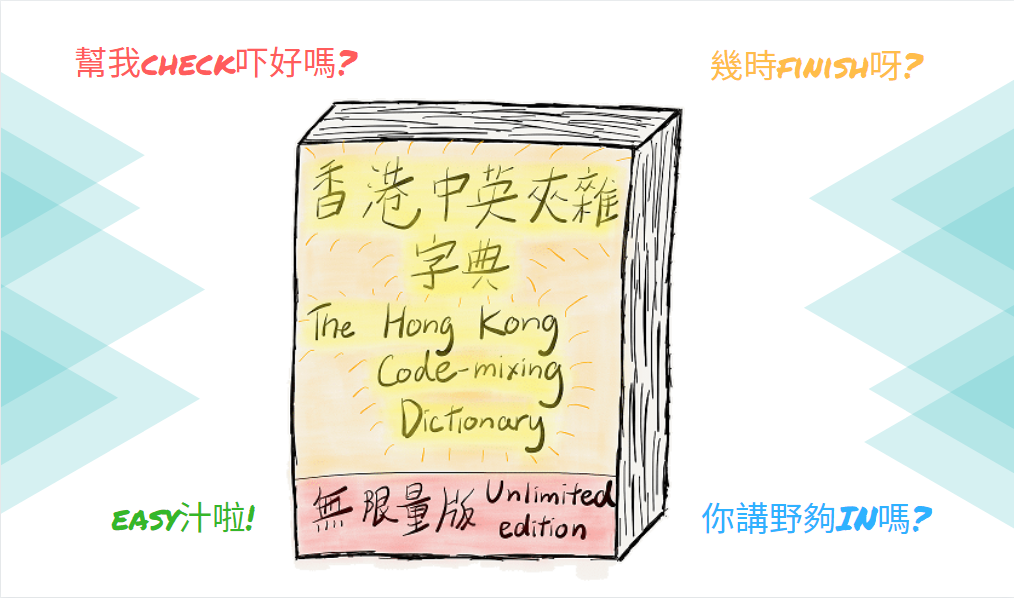
Definition: A code-mixing term used by working class Hong Kongers to refer to tasks that can be easily overtaken by the AI in this day and age.
Usage: E.g. 當AI包辦愈來愈多office work,中層最難解釋自己嘅價值。(When AI takes over more and more office work, it can be the most difficult for people working in middle management to explain their value.)
Synonym: 辦公室工作
Reference: https://www.threads.com/share/_vU5J7Dr9/
Definition: A code-mixing term that is often used instead of '取錄'.
Usage: E.g. 家人:邊間大學比左offer你呀? 你:仲未有offer呀。唔知幾時呢?
Synonym: 取錄
Definition: A code-mixing term used by a Jayden Mami to describe someone as unwilling to do something without placing a direct character judgement.
Usage: E.g. 學校啲homework完全冇做過呀Jayden。你咁lazy,媽咪angry架喇。下個月你birthday,冇得去disneyland架喇。(You have not done any homework from school, Jayden. If you are so lazy, Mami will be angry. And it's your birthday next month. I don't think we can go to Disneyland.)
Synonym: 懶惰
Reference: https://www.instagram.com/p/DXO4QiuMV4t/ (use mobile version)
Definition: Pronounced as 'serfaah', this is a code-mixing term that Hong Kongers use to refer to a computer server in IT.
Usage: E.g. 個server整好未呀?冇理由down左咁耐架?
Synonym: 服務器
Definition: A code-mixing term used by working class Hong Kongers as a neutral and factual way of referring to interview feedback of disapproval.
Usage: E.g. 今次interview既feedback都冇D咩negative野。(The interview feedback this time did not have anything negative.)
Synonym: 負面
Reference: https://lihkg.com/thread/1058101/page/1
Definition: A code-mixing term used by overseas educated Hong Kongers to refer to being able to gain experience of something by being in a particular environment rather than having physical contact with something. However, it is not to be confused with public exposure.
Usage: E.g. 學習語言要夠exposure。(Learning a language needs enough exposure.)
E.g. 做開大行去細行一定唔慣,exposure 又細啲,資源又小啲。(It must be hard getting used to working in a small company if you came from a large company. There is less exposure and resources are also less.)
Synonym: 接觸
Reference: https://lihkg.com/thread/2363704/page/1
Definition: A romanised code-mixing phrase that Hong Kong expats use to tell someone to hurry up. The particle 'la' is often added for emphasis.
Usage: Fai di la! The bus is here!
Synonym: 快D啦
Reference: https://geoexpat.com/forum/53/thread22332-2.html

 Instagram